- The Digital Marketing Page
- Posts
- #39
#39
C'mon Get Started!
In partnership with

Join Derek Jeter and Adam Levine
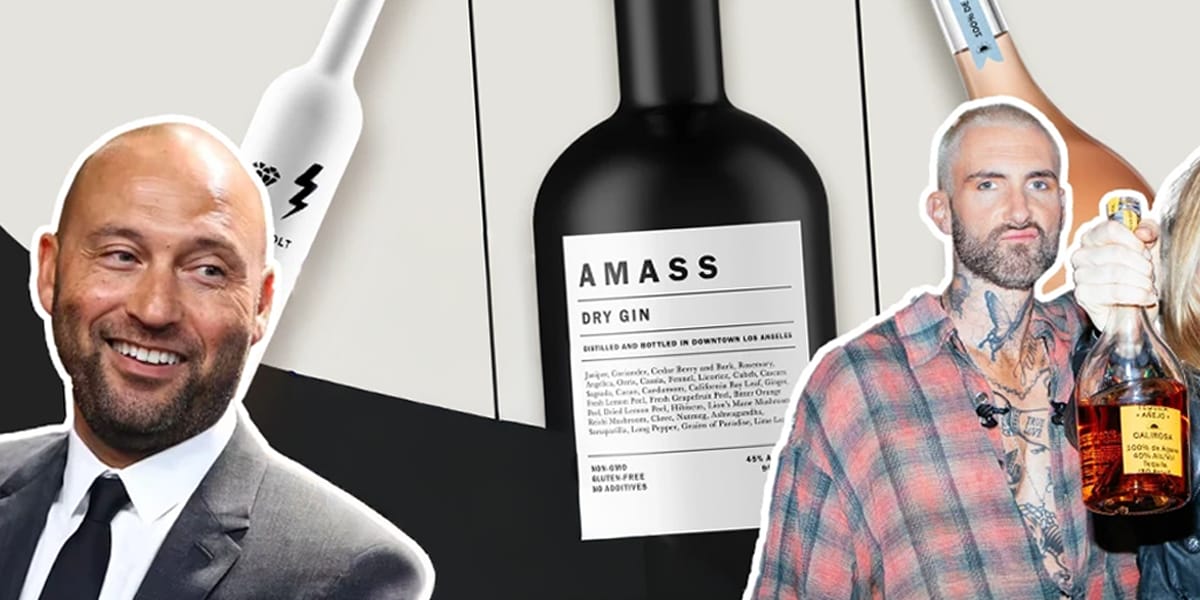
They’re both investors in AMASS Brands Group. You can join them and get up to 23% bonus stock. But only if you invest by Thursday, Dec. 4.
Why invest? They’re growing fast. Their brands cover everything from organic wine to protein seltzers. So with consumers seeking healthier options in the $900B beverage market, it’s no surprise AMASS has made over $80M to date, including 1,000% year-over-year growth.
They have even more ambitious plans for the future too. They’ve reserved the Nasdaq ticker $AMSS, enlisted a major investment bank to fuel their growth, and plan to 3X their retail footprint by 2028.
But your chance to amplify your investment with bonus stock ends soon. Become an AMASS Brands Group shareholder and secure your bonus stock by Dec. 4.
This is a paid advertisement for AMASS’s Regulation CF offering. Please read the offering circular at https://invest.amassbrands.com

/

The TikTok SEO Takeover: How Short-Form Video Is Now a Search Engine
👋 Personal Note
Hey there!
This week, I’ve been fascinated by how quickly TikTok’s role has shifted. It’s no longer “that place for dances” — it has become a full-blown search engine shaping discovery, attention, and culture. Let’s unpack what this means for digital marketers right now.
🔥 Main Feature Article — The TikTok SEO Takeover
For years, Google has been the undisputed gateway to information. But today, a seismic shift in search behavior is happening — especially among younger audiences — and TikTok is at the center of it. The platform has evolved from a pure entertainment feed into a dynamic search engine where people actively look for tutorials, reviews, recommendations, and deep-dive explanations.
TikTok isn’t quietly competing with Google. It’s openly replacing many of the searches people once made on traditional engines. And marketers harnessing this shift early are capturing absurdly high visibility at a fraction of the cost of traditional SEO.
Why TikTok Search Is Exploding
TikTok’s search dominance comes from one fundamental truth: people no longer just want information — they want experience-based answers. TikTok provides:
• Short, digestible explanations
• Results delivered through real people
• Visual demonstrations instead of text
• A discovery algorithm optimized for relevance, not ranking
When someone searches “best shampoo for curly hair,” TikTok does something even Google can’t: it shows real people with curly hair using the shampoo. For product-driven queries, this is unbeatable.
TikTok also auto-surfaces related keywords along the top of the screen, training users to explore deeper. It’s SEO gamified.
How TikTok SEO Actually Works
At a high level, TikTok ranking is driven by three layers:
1. Keywords Spoken in the Video
TikTok’s automatic speech recognition is extremely accurate. Saying your main keyword —
“Here’s how to style short curly hair…”
— signals the algorithm instantly.
2. Keywords in On-Screen Text
Text overlays, captions, and callouts become part of TikTok’s metadata.
A single line like “Amazon workouts at home” can trigger the video to index under multiple search categories.
3. Keywords in the Description
Creators who previously wrote short, witty descriptions are now packing them with strategic keyword sentences:
“How to film aesthetic videos at home using natural light.”
These three layers create stacked relevance signals that help TikTok categorize the video in search.
TikTok’s Search Bar Above Videos
This is the biggest indicator that TikTok is serious about search.
When your video is properly optimized, you’ll notice a clickable search phrase appear above the video — e.g.,
“How to clean white sneakers.”
That title is not chosen by you. It’s TikTok’s algorithm telling you:
“We understand what your content is about — and we think it should rank here.”
Videos with this bar often explode.
Why Brands Need TikTok SEO Immediately
Younger audiences trust TikTok results more than Google because the content feels grounded in real human experience.
This matters for brands because:
• Reviews drive buying decisions
• Tutorials drive retention
• Authentic content beats polished ads
• Organic reach is still massive
A mid-tier creator showing your product in a 12-second clip can outperform a $20,000 Instagram campaign.
TikTok as a Local Search Engine
The overlooked revolution is local search.
People now search TikTok for:
“best tacos in Austin”
“nail salons near me”
“vintage clothing NYC”
Local businesses that would struggle to rank on Google can dominate TikTok with a few well-optimized videos tagging their city and niche.
The TikTok Search Strategy for 2025
Here’s the framework brands should be using:
1. Create content around your top 10 evergreen keywords
These are the questions your customers always ask.
2. Film POV-style videos
Point-of-view content feels more personal — and ranks better.
3. Use conversational keyword phrases
“Here’s how I…”
“Best way to…”
“What to do if…”
4. Add text overlays with your core keyword on screen.
5. Put 2–3 natural keyword sentences in the caption.
6. Watch for the search bar above your video
If it shows up, double down and make multiple variations.
What The Future Looks Like
TikTok is already testing longer educational content, deeper search pages, and more structured metadata. Over time, we’re likely to see:
Dedicated TikTok “answer pages.”
Direct comparison shopping results
More search-based ad products
Search ranking analytics for creators
For digital marketers, the message is clear:
The early TikTok SEO land grab is happening now.
Those who treat TikTok like a search engine — not just a social app — will win.
⚡ Quick Tips
Say your keyword early in the video. TikTok’s voice AI picks it up immediately.
Use 1 main keyword and 2 supportive keywords. Overstuffing hurts discoverability.
Film in a vertical, POV style. Feels native, ranks better.
Watch for the auto-generated search bar. It’s a signal you’re indexing.
Make series content. Multiple videos targeting variations of the same search term stack authority.
👋 Sign-Off
Thanks for reading — see you in the next issue!
Keep creating, keep experimenting, and stay curious.

AI Micro-Influencers Are the New Growth Hack (and They’re Dirt Cheap)
👋 Personal Note
Lately, the marketing world has been buzzing about AI influencers — not the big, glossy CGI avatars, but micro AI influencers that brands can spin up in minutes. And honestly? The opportunity right now is wild. Let’s get into what’s happening and why this shift is rewriting influencer marketing.
🔥 Main Feature Article — AI Micro-Influencers
For years, influencer marketing has been defined by its biggest limitation: humans. Humans get tired. Humans need to be paid. Humans take vacations, get sick, and are unpredictable. But 2025 has introduced a new wave of opportunity: AI micro-influencers — hyper-specific, niche avatars designed to influence a particular audience with laser precision.
Unlike the big, brand-level AI models that mimic celebrities, micro AI influencers are intentionally narrow. Think “AI fitness coach for millennial moms,” “AI sneaker reviewer,” or “AI barber giving haircut tips.” They are designed for depth, not mass appeal — and brands are scaling them quietly behind the scenes.
Why AI Micro-Influencers Are Exploding Right Now
Influencer marketing has a few core problems:
Real creators are expensive
Content production takes time
Consistency is hard
Brands depend on unpredictable humans
Scale is limited — you can’t clone a human creator
AI micro-influencers eliminate all of these points with one simple advantage: infinite scalability.
Imagine being able to:
Generate 30 pieces of content per day
Test 100 creative angles
Run infinite ad variations
Localize content to any language instantly
Never rely on schedules or negotiations
That’s the new game.
AI Micro-Influencers vs. Traditional Influencers
Let’s compare:
Feature | Real Micro-Influencer | AI Micro-Influencer |
|---|---|---|
Cost | $300–$3,000 per post | $0–$30 per video |
Speed | Days or weeks | Minutes |
Consistency | Variable | Perfect |
Personality Control | Difficult | Exact & adjustable |
Brand Safety | Medium | High |
Scale | Limited | Unlimited |
The value gap is massive.
But Do People Know They’re AI?
Here’s the twist — they do, and they don’t care.
Consumers already follow virtual accounts. The appeal isn’t that the influencer is real; it’s that the content is useful, entertaining, and aesthetic.
Most micro AI influencers don’t pretend to be real humans. They’re positioned as digital personalities with:
Their own style
Their own niche
Their own consistent themes
Their own fictional backstory
And people love them because the content is dependable.
Why Brands Are Quietly Adopting AI Influencers
There are five big reasons:
1. Cost-Effective Content At Scale
A brand can produce hundreds of product demos and lifestyle videos without ever hiring actors or creators.
2. Infinite Iterations for Ads
Want to test 50 hooks?
Want to try 30 backgrounds?
Want to target 12 niches?
AI enables creative volume that humans never could.
3. Total Brand Safety
AI influencers don’t suddenly make political statements, get canceled, or start promoting competitors.
4. Multilingual Reach
One influencer can speak English, Spanish, Hindi, and French — flawlessly.
5. 24/7 Production Pipeline
No downtime. No scheduling. No burnout.
What Makes an AI Micro-Influencer Effective?
The success of these digital personalities depends on five core elements:
1. A Clear Niche Identity
You don’t want generic faces.
You want characters with a defined purpose:
“AI Travel Guide for Budget Backpackers”
“AI Skincare Expert for Acne-Prone Skin”
“AI Real Estate Guru for First-Time Buyers”
The narrower the niche, the better the engagement.
2. A Signature Look
Consistency = trust.
You want the same aesthetic every time:
Same lighting
Same vibe
Same voice or tone
Same editing style
This creates brand recognition at scale.
3. High-Value Content
AI must be paired with real expertise.
The scripts, insights, and recommendations still need a strategy.
This is where marketers shine.
4. Relatable Personality Traits
AI influencers do best when they feel human in predictable ways — helpful, witty, motivated, curious.
5. Consistent Posting Rhythm
The real advantage?
You can publish 10–30 posts per day and dominate a niche through sheer volume.
Where AI Micro-Influencers Perform Best
Right now, three platforms are leading the charge:
1. TikTok
Short-form explainers, tutorials, POVs, and product demos work incredibly well.
2. Instagram Reels
Lifestyle personas, fashion, beauty, and motivational content thrive.
3. YouTube Shorts
AI explainers and quick guides are exploding — especially in tech, finance, and fitness.
How Brands Are Monetizing AI Influencers Right Now
There are five big buckets:
1. Product Demos
AI avatars show how a product works in quick, repeatable videos.
2. UGC for Ads
Brands replace human UGC with AI UGC for endless ad variations.
3. Affiliate Marketing
AI micro-influencers can promote products they “love” across dozens of niches.
4. Digital Products
AI avatars selling courses, templates, and guides perform shockingly well.
5. Virtual Brand Ambassadors
One brand can maintain an entire team of digital ambassadors — each niche-specific.
The Future: AI Influencer “Teams”
Brands are starting to launch multiple AI influencers at once:
A travel persona
A fitness persona
A home decor persona
A skincare persona
These teams create cross-promotion loops that amplify reach and credibility.
Why This Matters for Digital Marketers
AI micro-influencers represent:
Unlimited creative testing
Speed no human can match
Niche domination
Radical cost-cutting
A massive competitive advantage
This is the next frontier of content and advertising — and early adopters are winning fast.
⚡ Quick Tips
Pick one niche per AI persona — the narrower, the better.
Use consistent backgrounds to maintain identity.
Script your content with real value — AI visuals mean nothing without strong messaging.
Create 10–20 variations of each video to fuel ads.
Build multiple personas to own multiple niches.
👋 Sign-Off
That’s a wrap on this deep dive. AI creators aren’t replacing humans — they’re replacing inefficiency. More coming soon!

The Rise of Silent Ads: Why Muted Creative Is Winning Across Platforms
👋 Personal Note
If you’ve scrolled social media lately, you’ve probably noticed something interesting: most ads are silent. Not by accident — but by design. Brands are leaning into muted creative because attention is scarce, and sound is optional. This shift is reshaping how marketers plan, design, and execute effective campaigns. Let’s dig into it.
🔥 Main Feature Article — The Rise of Silent Ads
For years, marketers obsessed over sound design — energetic music, clever voiceovers, and dramatic audio cues. But the reality of modern content consumption has flipped that on its head. Most people now watch videos without sound. Whether they’re commuting, working, lounging, or avoiding interrupting others, users scroll in silence.
This created a new creative frontier: silent-first ads. And they’re outperforming traditional ad models across every major platform.
Why Silent Ads Work
Silent ads are effective for a simple reason: they respect the way people actually consume content. Instead of assuming the viewer will turn up the volume, brands design visuals that communicate instantly.
Silent-first ads win because:
They force clarity of message
They’re platform-native
They rely on visual storytelling
They avoid the “video surprise” effect
They reduce resistance and friction
Marketers who master this format see higher retention, longer watch times, and better conversions — often at lower costs.
The Platforms Driving Silent Ad Growth
1. TikTok
While TikTok is known for sound, the surprising truth is that many users scroll muted — especially in public. The algorithm now boosts videos that are visually clear without needing audio.
2. Instagram Reels
Instagram auto-mutes content for many users until tapped. Silent-first ads blend seamlessly into the feed, mimicking organic posts.
3. Facebook Feed & Stories
Facebook has long been ahead of the trend. Silent ads here consistently outperform sound-dependent ones.
4. YouTube Shorts
Even on YouTube, short-form viewers don’t always enable sound — especially on mobile. Silent ads with bold text overlays get higher retention.
5. LinkedIn
This platform is nearly 80% silent. Professionals scroll without audio in offices or meetings.
Silent ads fit all of these environments perfectly.
The Psychology Behind Silent Ads
Silent creative taps into three key psychological principles:
1. Cognitive Ease
The brain processes visuals far faster than sound. Silent ads rely on fast, frictionless comprehension — which users subconsciously reward with attention.
2. Pattern Breaks
Most ads expect sound. When you create a silent-first ad, the unexpected visual simplicity stands out.
3. Multitasking Behavior
People multitask constantly. Silent ads accommodate that reality without asking users to change their behavior.
How Silent Ads Work Without Sound
Great silent ads usually incorporate some combination of:
1. Bold On-Screen Text
Think subtitles, captions, or headline-style overlays that communicate the core message instantly.
Example:
“Stop wasting money on ads that don’t convert.”
2. Visual Storytelling
Show the transformation or payoff:
before/after
problem/solution
step-by-step sequences
3. Clear Demonstrations
Product actions speak louder than words — literally.
4. Exaggerated gestures or expressions
Human movement catches attention even without sound.
5. Crisp editing and pacing
Fast cuts, zooms, and motion graphics keep the viewer’s eyes locked in.
Why Silent-First Ads Perform Better
There are five core advantages:
1. Higher Watch Time
Silent ads blend more naturally into user behavior.
2. More Inclusive
Silent-first design is accessible to users with hearing impairments or language barriers.
3. Global Scalability
No need to re-record audio in new languages — just swap text overlays.
4. Lower Production Costs
No voice actors, no audio mixing, no expensive soundtracks.
5. Better Conversion Performance
Silent ads often produce better click-throughs because the message is delivered instantly and visually.
The New Silent-Ad Creative Formula
Silent ads follow a reliable structure that consistently performs across platforms:
1. Instant Hook (0–1 seconds)
A bold visual or statement.
Example: “This editing trick saved me 8 hours a week.”
2. Visual Problem Setup (1–3 seconds)
Show the frustration or challenge — visually.
3. Solution Reveal (3–6 seconds)
Introduce your product or idea in action.
4. Micro-Demo (6–10 seconds)
Quick visuals showing how it works.
5. Visual CTA (final 2 seconds)
Clear, direct, minimal:
“Download free template.”
“Get 20% off today.”
All without sound.
Examples of High-Performing Silent Ad Styles
Overhead “desk POV” demos
App walkthrough screen recordings with text overlays
Hands-only product demos
Whiteboard breakdowns
Stop-motion sequences
Step-by-step tutorials with bold captions
Lifestyle shots with minimal text
The magic is simplicity and clarity.
The Future of Silent-First Advertising
We’re only at the beginning of this shift. Expect to see:
Silent-first templates becoming standard
AI-generated silent ad variations
Entire campaigns optimized without voiceovers
Brands adopting global silent frameworks
Creators specializing in silent UGC
Silent ads won’t replace sound entirely — but they’re becoming the new default for attention-first creative.
⚡ Quick Tips
Start your ad with an instant visual hook.
Use big, bold text overlays — readable in 0.5 seconds.
Film product demos; avoid talking-heads that rely on audio.
Keep text to 10 words or fewer per screen.
Assume the viewer will never turn on the sound. Design accordingly.
👋 Sign-Off
Hope this sparked a few ideas. Silent creatives are no longer optional — they’re a competitive advantage. See you in the next issue!

Email Is Hot Again: 2025 Tactics That Are Quietly Printing Money
👋 Personal Note
If you’ve been in digital marketing long enough, you’ve probably heard “email is dead” more times than you can count. And yet—here we are in 2025—and email is thriving again. Between privacy changes, platform volatility, and the rise of AI personalization, email has become one of the most profitable channels all over again. Let’s break down why this resurgence is happening and what you can do to get ahead of it.
🔥 Main Feature Article — Email Is Hot Again
Email marketing is experiencing a full-fledged renaissance. While social platforms have tightened algorithmic reach and ads have become more expensive, email has quietly re-established itself as the most dependable, high-ROI communication channel for marketers.
What’s changed isn’t whether email works, but how it works. The strategies that succeeded in 2018 don’t cut it in 2025. Today, leading brands are using a combination of behavioral personalization, micro-segmenting, gamification, and automated value delivery to generate massive results.
Why Email Is Surging Again
Several major forces are pushing marketers back toward email:
1. Algorithm Fatigue
Brands are tired of depending on Instagram, TikTok, LinkedIn, and Facebook to “bless” their content. Email bypasses all social gatekeepers.
2. Privacy Shifts
With cookies dying, email becomes the single most reliable identifier you own.
3. Direct Ownership
Email lists are assets—not rented audiences.
If a platform shuts down, your list stays with you.
4. AI Personalization
AI now allows you to personalize emails at scale.
Subject lines, product recommendations, and even content blocks can be dynamically generated based on behavior.
5. Insane ROI
Email still averages $36–$42 for every $1 spent, and for high-performing brands, this can reach into the hundreds.
The New Rules of Email in 2025
The inbox is crowded, but winning brands follow a fresh playbook:
Rule #1: Deep Personalization Is Mandatory
Generic broadcasts don’t work anymore.
The modern inbox demands relevance.
Brands now use:
Behavioral triggers
Purchase signals
Preference data
Browsing history
Content consumption patterns
The goal is simple:
Every subscriber should feel like the email was written just for them.
Personalization today goes far beyond using someone’s name. It means:
Recommending the right product at the right time
Sending the right content based on engagement
Tailoring the CTA based on the funnel stage
Delivering different hero sections based on interests
AI tools make this automatic.
Rule #2: Micro-Segments Convert Better Than Large Lists
Instead of blasting to a list of 50,000, brands split their audience into:
“Readers who click on tools”
“Shoppers who abandon carts”
“Subscribers who read financial topics”
“Users who reacted to tutorials but not product links”
“Subscribers inactive for 30 days.”
Small segments create big results.
Micro-segmented campaigns often get:
Higher open rates
Better click-throughs
Dramatically stronger conversions
Segmentation is no longer optional — it’s the advantage.
Rule #3: Interactivity Boosts Engagement
Static emails are fading.
Interactive emails are surging.
Brands now incorporate:
Polls
Quizzes
Product carousels
Accordions
“Tap to reveal” blocks
Gamified rewards
Progress trackers
Spin-to-win offers (ethically calibrated)
This increases engagement by 2–5x.
In 2025, people don’t just want to read emails; they want to experience them.
Rule #4: You Must Treat Email as a Media Product
The best-performing emails today feel like content pieces—not promotions.
A good rule of thumb:
Teach first. Sell second.
Readers stick around when:
The content is valuable
The insights are actionable
The tone is human
The format is predictable
The style is enjoyable
If your emails feel like mini-magazines, you win.
Rule #5: Welcome Sequences Are More Important Than Newsletters
Your welcome sequence is the most important part of your entire email marketing system.
This is where people decide:
Do I trust this brand?
Do I like their voice?
Is this worth my inbox space?
High-performing welcome sequences usually include:
A warm introduction
A high-value “signature piece.”
A story or mission snapshot
Social proof or credibility
A light offer or next step
A value-packed takeaway
This sequence drives more revenue than daily emails for many brands.
Rule #6: Automation > Manual Sending
Today’s strongest email systems run on automated flows:
Abandoned cart
Browse abandonment
Post-purchase journeys
Upsell/downsell flows
Cross-selling sequences
Revival sequences
Onboarding
Event-based triggers
These flows do the heavy lifting.
They run while you sleep.
And they print money.
Rule #7: Simplicity Wins the Click
Beautiful visuals are nice — but clarity is king.
Modern emails need:
One main idea
One main CTA
Short paragraphs
Clear formatting
Skimmable structure
Strategic spacing
Bolded takeaways
People don’t have time to decipher cluttered emails.
The simpler your message, the higher your conversions.
What’s Next for Email in 2025?
Expect these trends to strengthen:
AI-generated personalized newsletters
Real-time adaptive content blocks
Emails that change after being opened
Behavioral-based discounting
Predictive segments
Inbox-level analytics with smarter scoring
Automatic pruning systems to improve deliverability
Email is no longer just a communication channel — it’s becoming a fully adaptive marketing ecosystem.
⚡ Quick Tips
Send more segmentation-based emails instead of mass blasts.
Use interactive elements to boost clicks and dwell time.
Clean your list monthly to improve deliverability.
Add 3–5 automated flows to replace manual work.
Focus the entire email on one core idea.
👋 Sign-Off
Email is far from dead — it’s evolving faster than ever. If you lean into personalization, segmentation, and value-first content, 2025 will be your most profitable email year yet. See you in the next one!

Creators Are Becoming Brands Faster Than Brands Become Creators
👋 Personal Note
I’ve been watching a fascinating shift lately: creators are building brands faster than traditional companies can learn to create. It’s flipped the entire marketing world upside down. This new dynamic is changing how products launch, how audiences grow, and how trust is built. Let’s break it down.
🔥 Main Feature Article — Creators Are Becoming Brands Faster Than Brands Become Creators
For decades, brands held all the power. They controlled distribution, messaging, public perception, and the consumer pathway. But today in 2025, the leverage has shifted. Creators — individuals with loyal digital audiences — are building full-blown brands faster than traditional companies can keep up.
We’re in an era where a single creator can turn an audience into a million-dollar brand overnight. Meanwhile, classic companies struggle to create even a fraction of the engagement creators earn naturally through personality, familiarity, and consistency.
Why Creators Have the Advantage
There are four core reasons creators outperform brands today:
1. They Start With Trust
Creators build relationships one post, one video, one comment at a time.
Brand loyalty comes from connection, and creators have that baked in.
A creator says,
“I’ve used this product for months,”
and the audience believes them — because the relationship is parasocial and emotional.
2. They Move Faster
Creators can ideate, produce, and publish content within hours.
Brands need:
approvals
legal review
production teams
meetings
assets
coordination
Creators simply… post.
3. They Understand the Platforms
Creators are digital-native performers.
Brands often treat content like commercials.
Creators treat it like communication.
Creators:
Know trends
Speak platform language
Understand culture
Adapt fast
Post dynamically
Brands?
They usually move too slow to matter.
4. Their Content Feels Human
Creator content is imperfect — and that’s exactly why it works.
Audiences crave:
authenticity
personality
real-life moments
unpolished honesty
Brands are still stuck trying to be corporate, polished, and safe.
Creators Are Becoming “Multi-Niche Ecosystems”
A powerful trend right now is creators building brand families.
Instead of launching one product line, creators are launching multiple brands across:
Beauty
Fitness
Skincare
Digital products
Apparel
Supplements
Tech
Courses
Memberships
This turns creators into multi-niche ecosystems — generating income across multiple verticals.
Think:
A creator with a skincare brand, a digital course, and a merch line.
A fitness creator launching supplements, a meal-prep service, and coaching.
A film creator launching online classes, presets, and gear partnerships.
Creators aren’t just influencing brands — they are the brands.
Why Brands Struggle to Become Creators
Brands try to be creators, but they run into three barriers:
1. No Human Face
People don’t connect with a logo.
Trust comes from people — facial expressions, voices, stories.
Brands stay faceless and wonder why engagement is weak.
2. Lack of Consistency
Creators can post 30 times a week.
Brands can barely post 3 times a week.
The volume mismatch kills reach.
3. Slow Execution
Creators adapt instantly.
Brands take weeks or months.
In a fast-moving content environment, slow = invisible.
The Creator Advantage Flywheel
Here’s the cycle that makes creators unstoppable:
Post content regularly
Build trust + familiarity
Launch a product
Sell instantly to a warm audience
Reinforce authority
Use revenue to grow the brand
Post more content
Grow further
The flywheel spins faster each time.
Creators Don’t Need Permission — Brands Do
Creators can:
Test a new product idea in one video
Launch a campaign the same day
Get feedback instantly
Pivot in hours
Interact with followers directly
Brands have to go through:
Permissions
Committees
Budgets
Coordinators
Legal teams
Agency handoffs
Creators operate like startups.
Brands operate like slow bureaucracies.
Brands Are Starting to “Hire Creators” — The Right Way and Wrong Way
Brands know creators matter. But they often approach them badly.
The wrong way:
“Make us one video.”
The right way:
“Become the face and personality of our ongoing content engine.”
Brands should be onboarding creators as:
recurring creative partners
brand personalities
strategic advisors
community leaders
long-term storytellers
creative directors
Creators bring life to content.
Brands bring resources.
Together = unstoppable.
How Brands Can Catch Up
Brands that want to operate like creators need to adopt these five strategies:
1. Put a Face to the Brand
Find one or more “brand hosts” — people who represent the identity of the company.
2. Build an In-House Creator Team
Treat content like a newsroom.
Produce fast. Adapt faster.
3. Post Imperfectly, Not Perfectly
Polished content loses.
Honest content wins.
4. Move From Campaigns to Content Streams
Creators don’t run “campaigns.”
They run continuous publishing cycles.
5. Engage Like a Human, Not a Corporation
Reply to comments.
Join trends.
Use humor.
Tell stories.
Be a person, not a logo.
Creators Will Dominate the Next Decade
The next generation of brands will look like this:
Personality-driven
Creator-led
Fast-moving
Community-focused
Content-native
Entertainment-first
A single creator can outmaneuver a Fortune 500 company simply by being more relatable, more consistent, and more platform-native.
The future belongs to creators — and brands willing to act like them.
⚡ Quick Tips
Put a real person in your content to humanize your brand.
Post more frequently — volume beats perfection.
Let creators lead your strategy, not just your campaigns.
Use personality-driven storytelling to build long-term brand trust.
Test product ideas publicly before building them.
👋 Sign-Off
Creators aren’t just shaping culture — they’re shaping commerce. And any brand that learns to think like a creator will win the next decade. See you next week!